Most people never read their homeowners policy. I don’t blame them. It’s forty pages of language written by lawyers for other lawyers.
Then hail comes through, an envelope shows up, and there’s a number on a check that doesn’t come close to what a roof costs. That’s when folks call me.
There are two documents that decide what comes out of your pocket. One you can read today. The other shows up after a storm. Here’s how to read both, and I’ll walk through exactly when money changes hands, because that’s the part nobody explains.
The first one: your declarations page
Most people never read their homeowners policy. I don't blame them. It's forty pages of language written by lawyers for other lawyers.
The two or three page summary at the front of your policy packet. Your agent sent it. It’s probably in an email you never opened.
Everything that matters is on it.
Your wind and hail deductible. Find out whether it’s a flat dollar amount or a percentage. A lot of Texas policies moved to percentage and homeowners didn’t catch it. One percent sounds like nothing. On a $400,000 house it’s $4,000 before your carrier pays a dime.
How your roof settles. This is the big one. On the dec page or in the endorsement list you’re looking for words like Roof Payment Schedule, Roof Surfaces Extended Coverage, or actual cash value settlement for windstorm and hail. Any of those and your roof pays differently than the rest of your house does.
A cosmetic damage exclusion. If it’s on there, hail that dents your roof without breaking it may not get paid at all. You can have solid coverage everywhere else and still get denied under that one clause.
Ten minutes with that page tells you more than most people learn in twenty years of paying premiums.
What ACV and RCV actually mean
Two ways a policy can pay for a roof.
Replacement cost, or RCV. Your carrier pays what a new roof costs today. The money comes in two payments.
Actual cash value, or ACV. Your carrier pays what your old roof was worth on the day the storm hit. Age comes off the top. One payment, and that’s the end of it.
On a five year old roof there’s barely a difference. On a sixteen year old roof it’s enormous.
Let’s use round numbers. A $20,000 roof. Your home is insured for $400,000 with a 1 percent wind and hail deductible, so $4,000. The roof is 16 years old, which puts depreciation at $12,000 and actual cash value at $8,000.

With RCV your carrier pays $16,000 across two checks and you’re out the deductible. $4,000.
With ACV your carrier pays $4,000. One check. You’re out $16,000.
Notice the bottom of both columns is the same. Both start with a $4,000 check. Everything that matters happens after that.
The second one: your claim summary
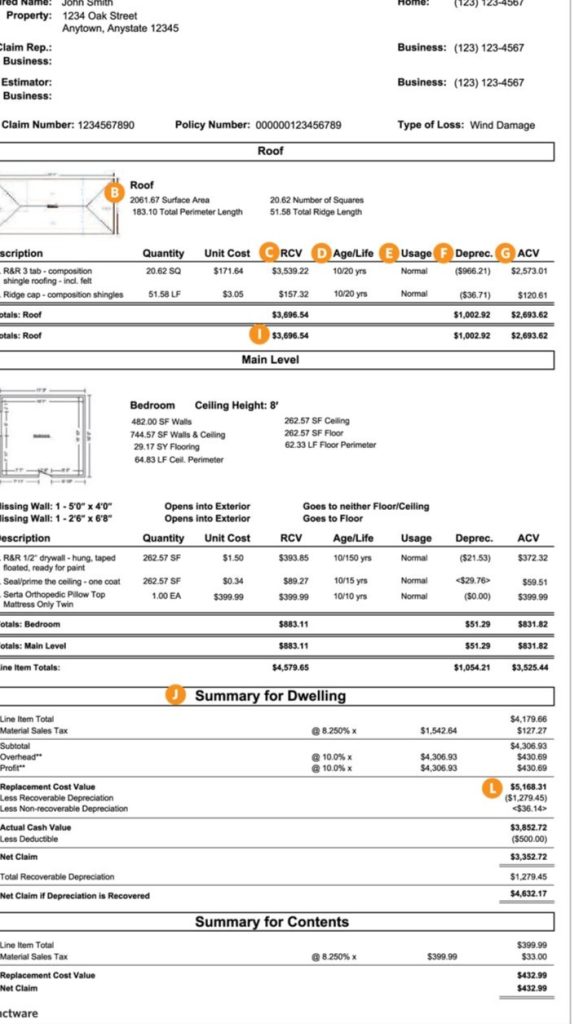
After the adjuster comes out you get a packet. Most people look at the check amount and set the rest aside. The last page is the one worth reading.
It looks about like this.
| Replacement Cost Value | $20,000.00 |
| Less Depreciation | ($12,000.00) |
| Actual Cash Value | $8,000.00 |
| Less Deductible | ($4,000.00) |
| Net Claim | $4,000.00 |
| Total Recoverable Depreciation | $12,000.00 |
| Net Claim if Depreciation is Recovered | $16,000.00 |
Read it top to bottom and it tells the whole story.
Replacement Cost Value is what your carrier figures the job costs. Not what you’re getting. Just the starting number.
Less Depreciation is age coming out.
Actual Cash Value is what’s left after age.
Less Deductible is your part.
Net Claim is the first check. This is the number that scares people, and on an RCV policy it’s supposed to look small.
Now find that last line. If your summary says Net Claim if Depreciation is Recovered, you have replacement cost coverage and there’s a second check waiting on you.
If that line isn’t there, or if it says non-recoverable depreciation, that’s it. No second check. The gap is yours.
One line on a page most people never turn to, and it’s the difference between a $4,000 problem and a $16,000 problem.
When the money actually moves
Here’s the part I get asked about in driveways and nobody puts on a website. When do you pay us, and how much.

On an RCV job. You pay us your deductible before we start. That’s the $4,000, and that’s what gets you on the schedule.
We build the roof. Nothing else is due while the work is going on.
When the job is finished, you pay us the first check amount, the $4,000 your carrier already sent you. Then we send the carrier our final invoice and the completion paperwork. They release the $12,000 in depreciation, and that comes to us last.
We got $20,000. You were out $4,000.
One thing to plan for. If there’s a lien on your house, your carrier’s checks get made out to you and your mortgage company both, and they have to go to your lender for endorsement before you can do anything with them. Call your lender’s loss draft department the day a check arrives. That step surprises people every year and it adds time.
On an ACV job. Same start. Deductible up front, $4,000, and we get you scheduled.
Same roof, same crew, same timeline. But when we finish there’s no second check coming from your carrier. You pay the remainder, $16,000. Part of that is the check the carrier already sent you. The rest is yours, out of pocket or through financing.
We got $20,000. You were out $16,000.
Worth saying plainly. We get paid the same either way. Your coverage decides who writes the checks, not what the roof costs. Anybody who tells you they can make an ACV claim cost you less is either cutting the job or breaking the law.
Your deductible is not optional. If a contractor offers to eat it, waive it, or work it into the price, walk away. That’s insurance fraud in Texas and you’re the one holding the bag, not him.
Why our number won’t match theirs
Behind the summary page is the itemized scope, usually built in software called Xactimate. Every line of work with a price attached.
Their number and my number are almost never the same on the first pass. That’s normal and it isn’t a fight.
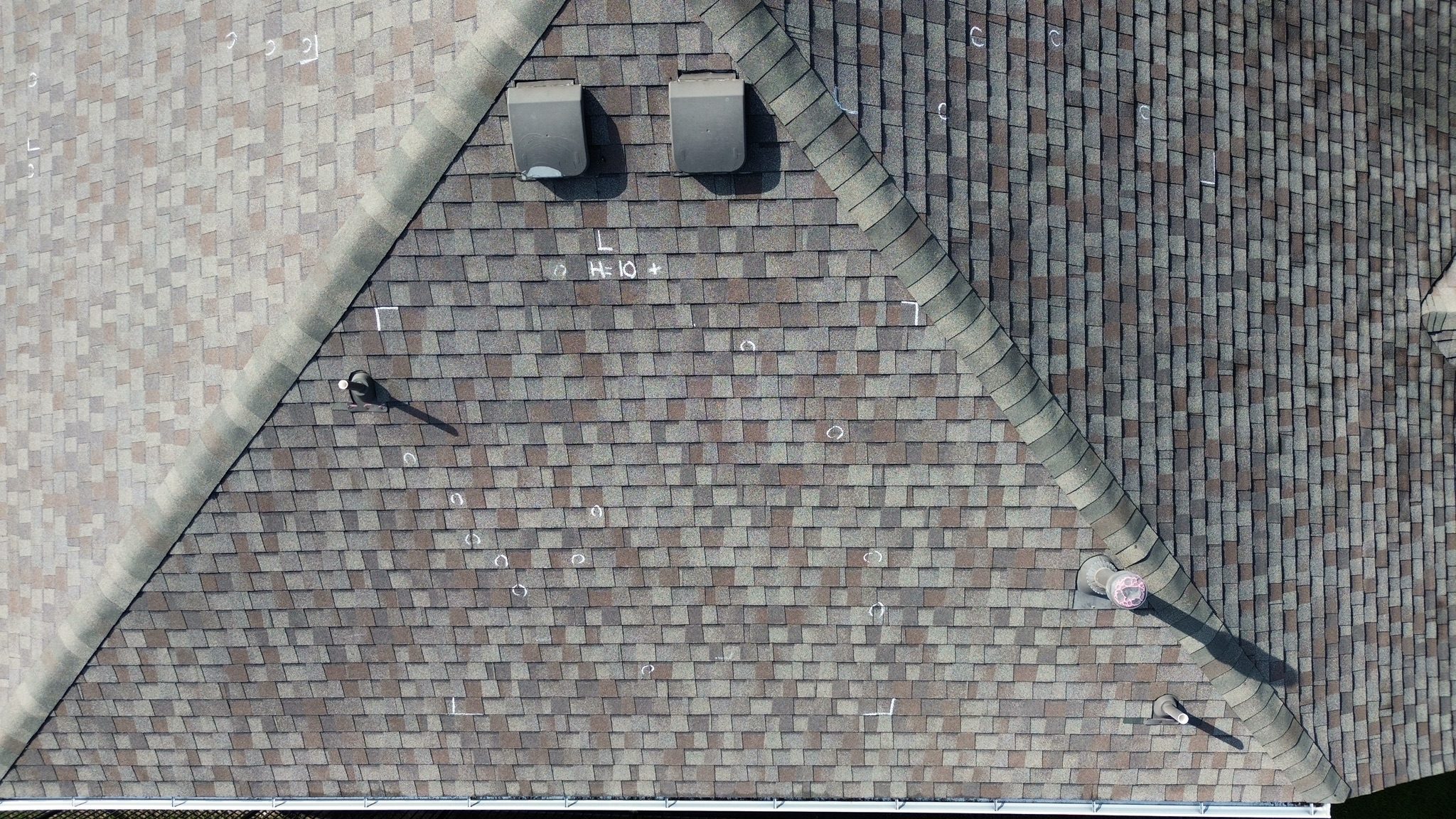
Adjusters cover a lot of properties. Twenty minutes on your roof in July heat with a tablet, and things get missed. What I see missing most is damaged decking under the shingles, code required upgrades, permit fees, and disposal.
When that happens we submit a supplement with photos and documentation, and the carrier adjusts the scope. That’s a standard part of a claim. If your contractor isn’t supplementing, you’re leaving money on the table.
Being straight about it though, supplementing gets you paid for work that’s genuinely required. It does not turn an ACV policy into an RCV policy. Nothing does that after a storm.
Words you’ll run into
Recoverable depreciation. The money your carrier holds back until the roof is on the house. You get it by finishing the work. Cash the first check and never do the job, and you never see it.
Non-recoverable depreciation. Same money. You don’t get it. This is ACV.
Endorsement. An add-on that changes your policy. Roof payment schedules and cosmetic exclusions both show up here.
Scope of loss. The itemized list of what the carrier agreed to pay for.
Supplement. A request to correct or add to that list.
Net claim. What the first check will be.
What to do with this
No storm on the ground right now? Go pull your dec page. Find your deductible in real dollars. Find out whether your roof pays replacement cost or actual cash value, and whether that changes at a certain roof age. If it isn’t clear, call your agent and ask those questions straight. Get the answer in writing.
Do it now, because you can’t move from ACV to replacement cost after a loss. No carrier allows it. Whatever your policy said the morning the hail came through is what governs.
Already in a claim? Turn to the summary page and look for that recoverable depreciation line, then send me the packet before you sign anything.
Couple of other things worth raising with your agent. Texas has some of the best Class 4 impact resistant shingle discounts in the country, and a newer impact resistant roof puts you in better shape with carriers who’ve been tightening up on roof age. And if your roof is already pushing nineteen or twenty, quit waiting on it. The depreciation math gets worse every year and non renewals are getting more common around here.
We’ll read it with you
Bring us the declarations page, or the claim packet, or both. We’ll go through it line by line and tell you what your out of pocket number is before anybody touches your roof.
We do this for homeowners in Killeen, Temple, Belton, Salado, Harker Heights, Georgetown, and Waco. Hundreds of storm claims through this office and we’ve seen about every version of this paperwork there is.
One note. FSR is a roofing contractor, not an insurance agency. We can tell you what your paperwork says and what it means for your roof. Questions about changing your coverage go to your agent.
Frequently Asked Questions
What is the difference between ACV and RCV?
ACV pays the depreciated value of your roof. RCV pays the full cost to replace it, released in two payments. On a 16 year old roof that difference ran $12,000 in our example.
Why is my first insurance check so much smaller than the estimate?
On an RCV policy that’s normal. The first check is actual cash value minus your deductible. The rest is released after the work is finished.
What is recoverable depreciation?
Money your carrier holds back until the roof is actually replaced. You recover it by completing the work and submitting a final invoice.
When do I pay my roofer on an insurance job?
Your deductible comes first, before we get you on the schedule. Nothing else is due while we build. The balance is paid after the job is finished. On an RCV claim that balance is mostly your carrier’s money, the first check plus the depreciation they release once the final paperwork is in. On an ACV claim it comes from you.
Why is my check made out to my mortgage company?
If there’s a lien on your house, your lender is named on the check and has to endorse it. Call your lender’s loss draft department as soon as the check arrives. It adds time to the process.
Where do I find out if I have ACV or RCV?
Two places. Your declarations page before a storm, under roof settlement or the endorsement list. Your claim summary after a storm, on the line that says Net Claim if Depreciation is Recovered.
Why is my roofer’s estimate different from my insurance estimate?
Adjusters work fast and miss things. Decking, code upgrades, permit fees, and disposal are the usual gaps. Your contractor submits a supplement with documentation and the carrier adjusts.
Can I switch to replacement cost coverage after a storm?
No. That has to happen before a loss.
Does filing a hail claim raise my rates in Texas?
Texas law prohibits carriers from raising your rates solely for filing a weather related claim. Carriers vary on how they handle renewals, so ask your agent directly.
Get your free roof inspection from the FSR team. Schedule Free Inspection
Still need help understanding the paperwork ?
Speak with our team.